Product Overview
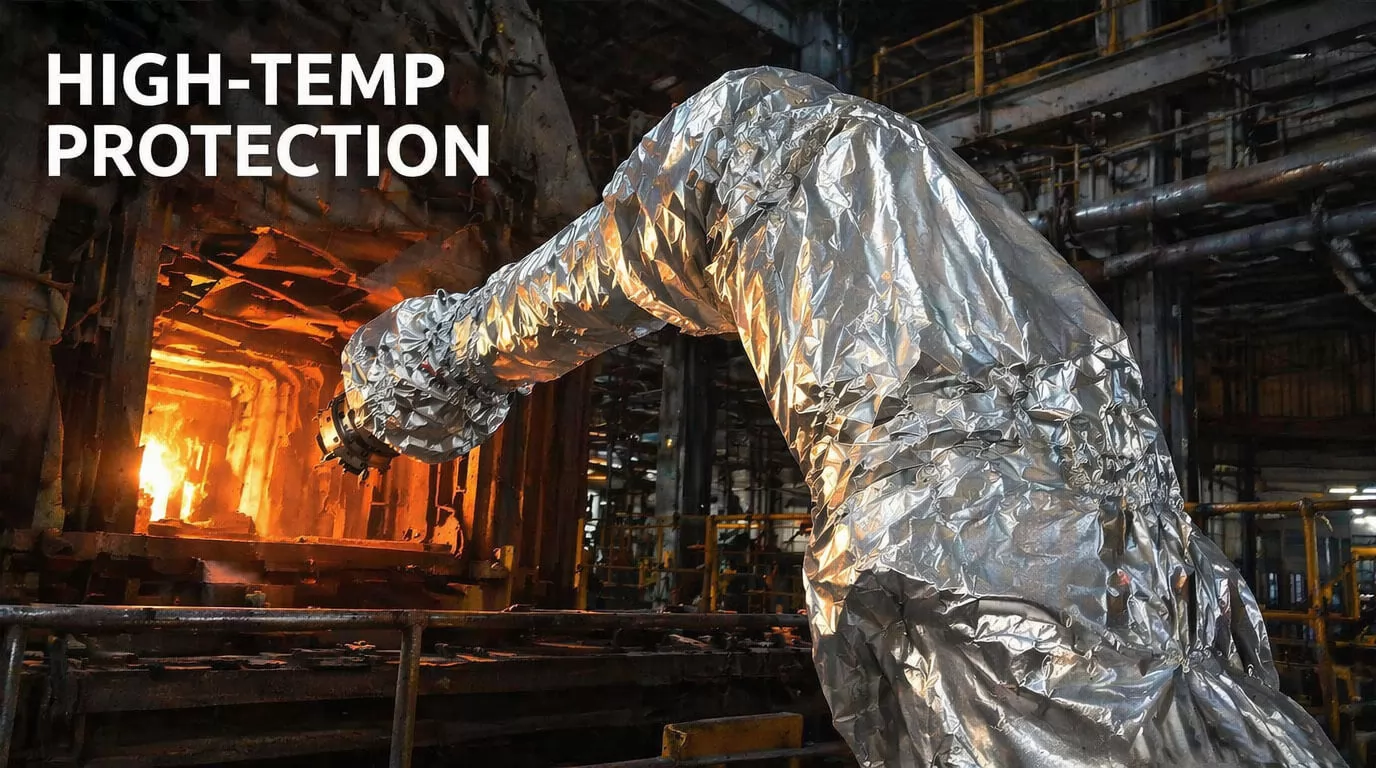
LXHTR Foundry Robot Protective Covers are custom-engineered protective systems designed for industrial robots operating in foundries, die casting plants, forging workshops, and other high-temperature manufacturing environments. The covers help shield robots from radiant heat, molten metal splash, abrasive dust, and mechanical wear, extending equipment life while reducing maintenance costs and downtime.
Core Design Features
-
Multi-Layer Thermal Barrier — Multiple layers of high-temperature fabrics and insulation materials help reduce heat transfer to sensitive robot components.
-
Molten Metal Splash Protection — Outer layers are designed to withstand exposure to sparks, slag, and occasional molten metal splash.
-
Flexible Joint Construction — Special articulation zones allow unrestricted robot movement without affecting positioning accuracy.
-
Custom-Fit Design — Each protective cover is tailored according to robot model, working envelope, and process requirements.
Key Advantages
-
Extended Robot Service Life — Protects cables, sensors, motors, and external surfaces from heat-related damage.
-
Reduced Downtime — Minimizes unexpected failures caused by thermal exposure and contamination.
-
Improved Process Reliability — Helps maintain stable robot performance in harsh industrial environments.
-
Lower Maintenance Costs — Reduces frequency of cleaning, repairs, and replacement parts.
-
Adaptable to Multiple Robot Brands — Compatible with ABB, FANUC, KUKA, Yaskawa, Kawasaki, and other industrial robots.
Technical Specifications
|
Property |
Specification |
|
Model |
RPC-FD 01 |
|
Product Type |
Foundry Robot Protective Cover |
|
Operating Temperature |
Up to 300°C / 500°C / 800°C (depending on design) |
|
Outer Layer Materials |
Silica Fabric, Aluminized Fabric, Aramid Fabric (depending on design) |
|
Insulation Layer |
Ceramic Fiber, Silica Felt, Thermal Composite (depending on design) |
|
Thickness |
Customizable |
|
Protection Functions |
Heat, Splash, Dust, Abrasion |
Typical Applications
-
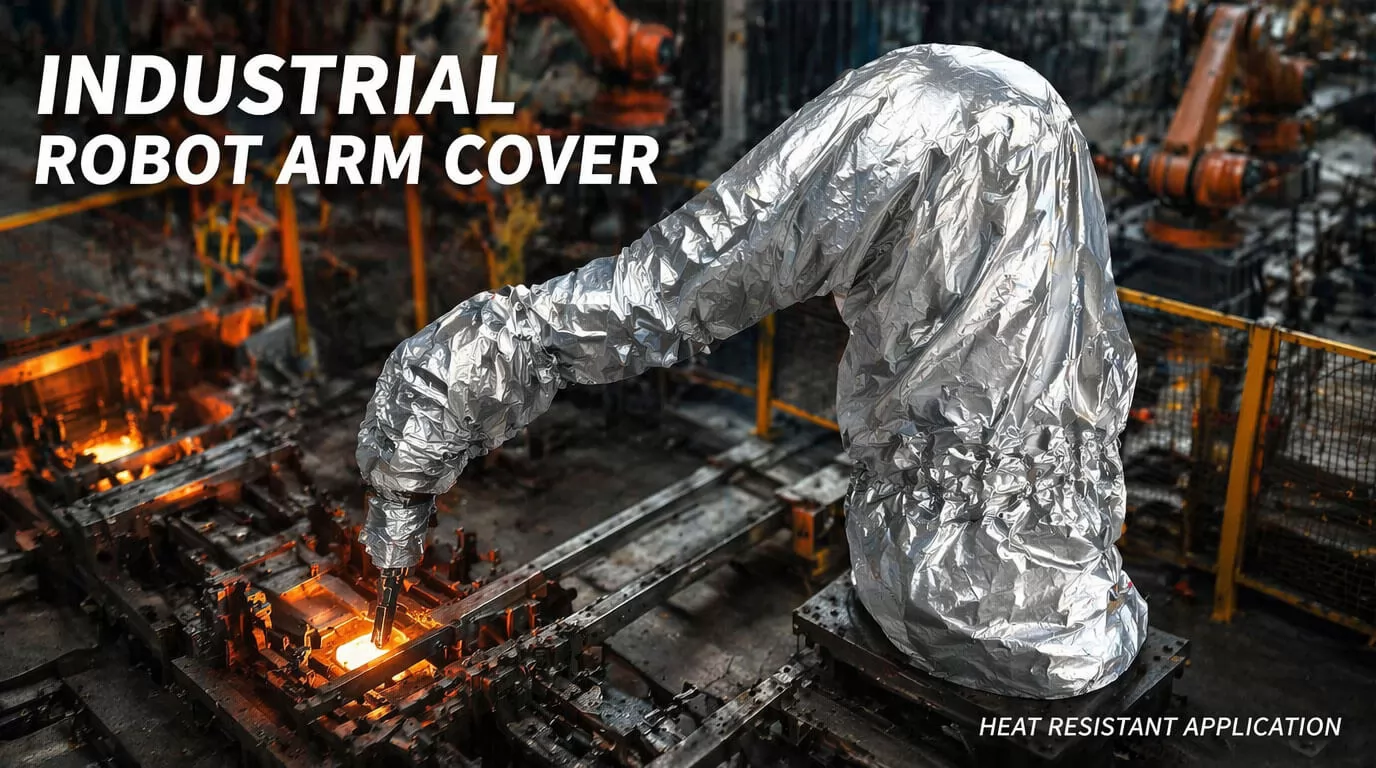
Metal Casting Robots: Protection during pouring, handling, and casting operations.
-
Die Casting Robots: Protection against molten aluminum and magnesium splash.
-
Forging Automation Lines: Shielding robots from radiant heat and scale particles.
-
Foundry Material Handling Robots: Protection in high-temperature transfer operations.
-
Smelting and Metallurgical Plants: Suitable for harsh thermal processing environments.
Customization & Support
LXHTR provides complete customization services based on:
-
Robot brand and model
-
3D drawings or CAD files
-
Working temperature
-
Heat source location
-
Maintenance requirements
-
Installation method
Available for ABB, FANUC, KUKA, Yaskawa, Kawasaki, Nachi and other industrial robots.
FAQ
Why does a foundry robot need a protective cover?
High temperatures, molten metal splash, and abrasive dust can damage robot cables, sensors, and external components. A protective cover helps extend robot service life and reduce maintenance costs.
Can the cover affect robot movement or accuracy?
No. The cover is custom-designed according to the robot's movement range to ensure full operational flexibility.
What robot brands are supported?
We can design protective covers for ABB, CRP, FANUC, KUKA, Yaskawa, Kawasaki, Nachi, and most industrial robot brands.
What information is required for customization?
To ensure an accurate design, please provide the robot model, operating temperature, application details, CAD/3D drawings (if available), and a video of the actual working environment.
Share your thoughts
Showing
6
of
0
reviews


