+86-15997942336
sales@lx-htr.com
Finding the right fiberglass cloth manufacturer is essential for businesses seeking reliable reinforcement materials with consistent quality, competitive pricing, and stable supply. This guide is built on authoritative industry data and follows the EEAT principles to help buyers identify trusted manufacturers and suppliers in the global fiberglass cloth market.
So, which fiberglass cloth manufacturers are worth sourcing from in 2026? This guide highlights the top companies based on manufacturing capabilities, product quality, certifications, export experience, innovation, and market reputation. As demand continues to grow across construction, automotive, marine, wind energy, and industrial composites, selecting the right supplier has become more important than ever.
This article introduces the leading fiberglass cloth manufacturers and explains the key factors that define a dependable supplier, helping you make informed sourcing decisions with confidence. Keep reading to discover the best companies and find the right partner for your business.
Table of Contents
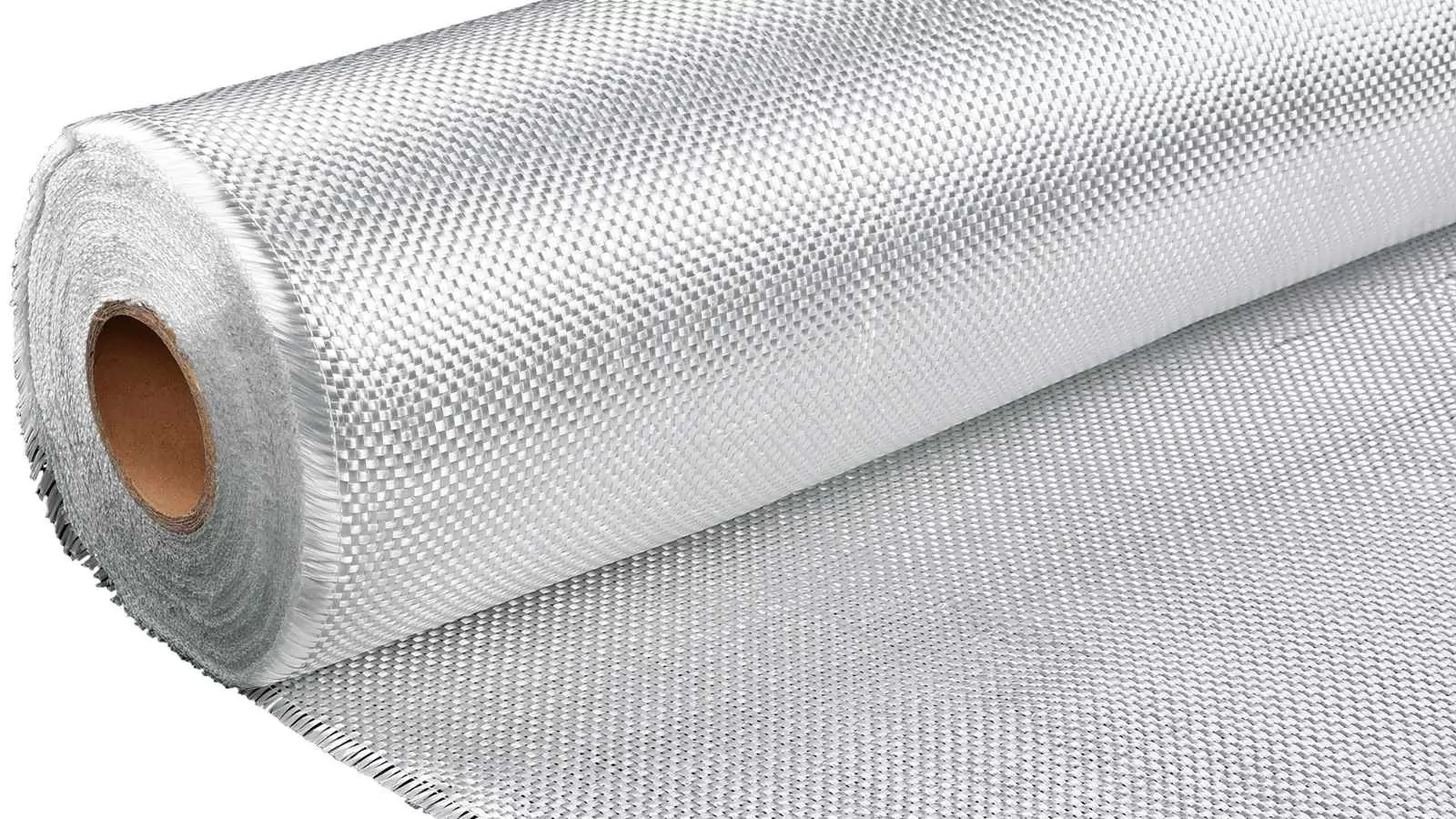
Picture a roll of what looks like pale, slightly stiff cloth — run your fingers across it and you'll feel individual threads, almost like a coarse linen. That's fiberglass cloth: thousands of glass filaments, each thinner than a human hair, drawn from molten glass and woven into fabric on a loom. On its own it's flexible enough to wrap around a curved boat hull or a pipe elbow. Soak it in resin and it hardens into something strong enough to hold a surfboard together through years of wave impact, or reinforce a wind turbine blade spinning through a storm.
Fiberglass cloth comes in different weaves — plain, twill, satin — and different weights, usually measured in ounces per square yard or grams per square meter. A 4 oz cloth drapes like tissue paper and suits small repairs; a 24 oz woven roving feels almost like canvas and goes into structural marine work. That range is exactly why buyers researching a fiberglass cloth manufacturer need to know their application before they start requesting quotes — the wrong weight or weave can mean a part that cracks under load instead of flexing with it.
A procurement manager once told us she'd been reordering the same "supplier" for two years before realizing the company didn't own a single loom — they were repackaging rolls bought from three different weavers, which is why her fabric weight kept drifting by a few grams between shipments. It's a common trap. Search "fiberglass cloth supplier" and you'll get a mix of actual weaving factories, warehouse distributors reselling surplus rolls, and small retailers slicing large rolls into hobbyist-sized cuts.
Here's the quick way to tell them apart before you commit to a bulk order:
| Type | What They Actually Do | Best For |
|---|---|---|
| Manufacturer / Factory | Owns looms, weaves and often coats the cloth in-house | Bulk orders, custom specs, private label |
| Distributor | Buys finished cloth from mills, holds inventory, resells | Mixed-brand stock, faster domestic shipping |
| Retailer | Cuts large rolls into small retail lengths | DIY projects, small repairs, one-off jobs |
None of these are "wrong" — but a wholesaler placing a container-load order with a retailer is paying markup for nothing, while a hobbyist trying to order five yards directly from a factory will hit MOQ walls. Match the seller type to your order size.
Think of it like hiring a contractor — a nice showroom doesn't tell you whether the work will hold up in five years. Before signing a purchase order with any fiberglass cloth factory, it's worth confirming a few things that don't show up in a product photo:
Quick vetting checklist:
A supplier who hesitates on any of these — especially the sample request — is telling you something. A cloth that looks identical on a spec sheet can behave completely differently under resin, and the only way to know for sure is to test it in your own hands first.
| Manufacturer | Headquarters | Best For |
|---|---|---|
| 1. JPS Composite Materials | USA | Bulk fiberglass cloth from a certified US weaving factory |
| 2. BGF Industries | USA | Aerospace & electronics-grade fiberglass fabric at scale |
| 3. McAllister Mills | USA | Fully in-house woven, coated & fabricated fiberglass parts |
| 4. Auburn Manufacturing (AMI-GLAS) | USA | FM Approved, verifiably American-made welding cloth |
| 5. Nitto Boseki (Nittobo) | Japan | High-purity electronic-grade glass cloth for PCB/chip packaging |
| 6. ZS Fiberglass (Zhongsheng) | China | Bulk fiberglass cloth & coated fabric under private label |
| 7. Kraft New Material | China | One factory for fiberglass, carbon fiber & aramid fabric |
| 8. JLON Composite | China | Fast sampling & wide GSM range for export orders |
| 9. Ruishun Materials | China | Factory-direct fiberglass cloth with OEM/private-label support |
| 10. LXHTR | China | Fiberglass engineered into custom-fitted protection products |

JPS Composite Materials traces back to the legacy of Clark Schwebel and JPS Industrial Fabrics/JPS Glass, and today runs weaving operations out of Anderson, SC and Statesville, NC — the latter marketed as North America's largest fiberglass weaving facility. That scale is what makes JPS a go-to fiberglass cloth manufacturer for distributors and OEMs looking to source in bulk rather than pull from a reseller's leftover stock. As an AS9100 and ISO 9001 certified, Boeing-approved supplier, JPS weaves E-glass and S-glass plain weave fabrics from 0.5 to 8.0 oz per square yard in widths up to 82 inches, along with Astroquartz, para-aramid, and UHMWPE reinforcement fabrics. The company also engineers fabric finishes around specific resin systems and coating requirements, giving OEMs and private-label buyers room to move beyond generic stock without committing to a full custom-tooling order.
| Headquarters | Anderson & Statesville, USA | Business Type | Manufacturer & Supplier |
| Main Products | E-glass & S-glass fiberglass fabrics | Certifications | AS9100, ISO 9001, Boeing-approved |
| Advantage | Largest fiberglass weaving facility in North America | Website | jpscm.com |
Core Products:
Best For: Distributors, OEMs, and composite fabricators who need to source fiberglass cloth in bulk directly from a certified US weaving factory, with the option of custom finishes or private-label fabric programs.

Operating since 1941 as Burlington Glass Fabrics, BGF Industries was one of the first companies in the US to weave fiberglass textiles, and has been a subsidiary of France's Porcher Industries Group since 1988. That history matters to buyers because BGF isn't a newcomer repackaging someone else's cloth — it runs its own weaving and finishing lines across Virginia and South Carolina, supplying fiberglass fabric suppliers, distributors, and OEMs across aerospace, construction, filtration, and electronics. Product lines cover coated glass fabrics for EMI/RFI shielding, thermal insulation fabrics, and reinforcement cloth for wind turbine blades and PCB substrates, with the flexibility to work directly with buyers who need volume beyond what a small fiberglass cloth factory can offer.
| Headquarters | Danville, VA, USA | Business Type | Manufacturer & Supplier |
| Main Products | Woven & nonwoven fiberglass fabrics | Certifications | AS9100, ISO 9001 |
| Advantage | One of the first US fiberglass weavers, backed by Porcher Group | Website | bgf.com |
Core Products:
Best For: Buyers in aerospace, energy, or electronics who need a long-established US weaver capable of supplying fiberglass fabric to tight technical specifications at scale.

McAllister Mills has spent more than 40 years weaving thermal fabrics out of Independence, Virginia, and its operation is vertically integrated from yarn to finished cut-and-sew parts. For buyers comparing fiberglass cloth suppliers, that in-house control is the selling point: fiber development, weaving, coating, and lamination all happen under one roof, which tends to mean fewer surprises when an order scales from sample to bulk fiberglass cloth. Its E-glass fabrics are built for industrial heat protection up to 1000°F, and the company also produces basalt, silica, and Fiberglass Plus+ fabrics for customers who need something beyond standard glass cloth.
| Headquarters | Independence, VA, USA | Business Type | Manufacturer & Supplier |
| Main Products | Fiberglass, basalt & silica woven fabrics | Certifications | Vertically integrated US manufacturing |
| Advantage | 40+ years of in-house weaving, coating & fabrication | Website | mcallistermills.com |
Core Products:
Best For: Industrial buyers who want a US factory that weaves, coats, and fabricates fiberglass cloth into finished parts without outsourcing any step.

Auburn Manufacturing makes its "U.S. Manufacturer!" label a selling point on nearly every product page, and for buyers who need domestic sourcing, that's exactly the reassurance they're looking for. Based in Mechanic Falls, Maine, AMI produces its AMI-GLAS line of 100% fiberglass cloth, tape, rope, and tubing, FM Approved for spark protection and used in welding shields, expansion joints, and personnel safety gear. The company positions itself against low-cost imports that claim US origin but aren't, which is worth knowing if traceable domestic supply is part of your sourcing requirements.
| Headquarters | Mechanic Falls, ME, USA | Business Type | Manufacturer & Supplier |
| Main Products | AMI-GLAS fiberglass cloth, tape, rope, tubing | Certifications | FM Approved, USCG & MIL compliant |
| Advantage | Verified US manufacturing, no ceramic or asbestos content | Website | auburnmfg.com |
Core Products:
Best For: Buyers who need FM Approved, verifiably American-made fiberglass cloth for welding, gasketing, or safety applications.

Nitto Boseki, known globally as Nittobo, has been producing glass fiber since 1923 and is now one of the world's dominant suppliers of electronic-grade fiberglass cloth, holding a majority share of the global market for low-thermal-expansion T-Glass used in semiconductor packaging. This isn't a fit for every buyer on this list — it's a specialist glass fibre cloth supplier for PCB, chip-packaging, and high-speed data infrastructure customers rather than general composite or DIY markets. But for OEMs and distributors in electronics manufacturing, Nittobo's vertically integrated production, from fiber to finished cloth, is hard to match on consistency at this end of the industry.
| Headquarters | Tokyo, Japan | Business Type | Manufacturer & Supplier |
| Main Products | Electronic-grade glass fiber yarn & cloth | Certifications | Publicly listed (Tokyo Stock Exchange) |
| Advantage | Global leader in T-Glass & NE-Glass electronic cloth | Website | nittobo.co.jp |
Core Products:
Best For: Electronics manufacturers and PCB substrate producers who need high-purity, low-dielectric glass fiber cloth from a century-old specialist supplier.

ZS Fiberglass has built its business around a straightforward pitch to distributors and brand owners: it weaves the cloth and applies the coating in-house, instead of outsourcing coating to a third party like many smaller Chinese fiberglass cloth factories do. That matters if you've ever had a coated fiberglass fabric supplier struggle with color or performance consistency — the fewer subcontractors involved, the fewer places for quality to slip. Over roughly 20 years, ZS Fiberglass has grown its fiberglass cloth, fire blanket, and welding blanket lines to serve clients in over 30 countries, including well-known retail and industrial brands sourcing bulk fiberglass cloth for private-label programs.
| Headquarters | China | Business Type | Manufacturer & Supplier |
| Main Products | Fiberglass cloth, fire & welding blankets | Certifications | CE (fire blanket line) |
| Advantage | In-house weaving + coating, no third-party subcontracting | Website | zsfiberglass.com |
Core Products:
Best For: Distributors and brand owners sourcing bulk fiberglass cloth or coated fabric under private label, who want weaving and coating done by the same factory.

Kraft New Material runs its fiberglass fabric production on Dornier high-speed rapier looms across a roughly 20,000 m² production base, and positions itself as a technology-driven manufacturer rather than a trading company reselling other mills' output. Alongside standard E-glass, S-glass, and C-glass woven fabrics compatible with epoxy, BMI, cyanate ester, and phenolic resin systems, Kraft also produces carbon fiber, aramid, and basalt fabrics — useful for buyers who'd rather qualify one supplier for multiple reinforcement materials than manage separate fiberglass fabric suppliers for each. Custom textiles and prepreg fiberglass are available for marine, industrial, and infrastructure customers.
| Headquarters | China | Business Type | Manufacturer & Supplier |
| Main Products | Fiberglass, carbon fiber & aramid fabrics | Certifications | In-house quality control system |
| Advantage | Dornier rapier looms; multi-fiber production under one roof | Website | kraftnewmaterial.com |
Core Products:
Best For: OEMs and composite fabricators who want one factory capable of supplying fiberglass alongside carbon fiber or aramid reinforcement fabrics.

Changzhou JLON Composite splits its business into two clear lanes — reinforcement materials for composites, and fiberglass for building materials — which makes it easier for buyers to figure out quickly whether it fits their sourcing needs. Its fiberglass cloth manufacturer lineup runs from 30 to 800 g/m² in plain, twill, and satin weaves, with E-glass, C-glass, and S-glass options and silane, PTFE, or vermiculite surface treatments. What stands out for smaller and mid-size buyers is the sampling process: specs confirmed, sample ready within a week, standard lead time of 2–3 weeks on stock items like 4 oz, 6 oz, and 10 oz E-glass cloth, with EXW, FOB, CIF, and DDU terms available for fiberglass fabric for sale to overseas markets.
| Headquarters | Changzhou, Jiangsu, China | Business Type | Manufacturer & Supplier |
| Main Products | Woven, coated & multiaxial fiberglass fabric | Certifications | ISO-certified production, batch TDS |
| Advantage | 30–800 g/m² range with 1-week sampling turnaround | Website | jloncomposite.com |
Core Products:
Best For: Distributors and fabricators who want fast sampling and a wide GSM range from a China-based fiberglass cloth factory built for export.

Changzhou Ruishun New Materials keeps weaving, coating, cutting, and sewing under one factory, which is why it markets itself directly to global distributors and brand owners as a no-middleman source for fiberglass fabric. Its catalog spans industrial-grade, electronic-grade, prepreg, dyed, and silicone- or PU-coated fiberglass cloth, along with finished items like fire blankets and welding curtains, backed by SGS, ISO 9001, and CE certification. For buyers building their own product line, Ruishun also offers logo printing and custom packaging, positioning itself less as a raw-material-only fiberglass fabric supplier and more as an OEM/private-label partner for fiberglass cloth for sale under someone else's brand.
| Headquarters | Changzhou, Jiangsu, China | Business Type | Manufacturer & Supplier |
| Main Products | Fiberglass cloth, coated fabric & fire blankets | Certifications | SGS, ISO 9001, CE |
| Advantage | In-house weaving-to-sewing production, OEM/private label ready | Website | ruishunmaterials.com |
Core Products:
Best For: Wholesalers and brand owners who want factory-direct fiberglass cloth plus OEM packaging and private-label support in one order.
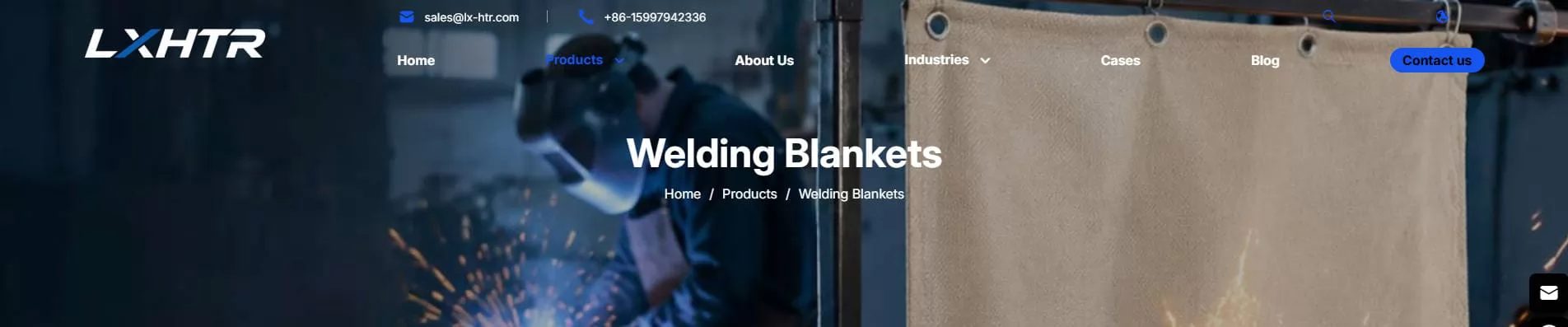
LXHTR, operated by Hubei Liaoxin New Material Technology Co., Ltd., takes fiberglass cloth a step further than most names on this list: rather than selling raw fabric, it converts fiberglass cloth into finished high-temperature protection products — welding blankets, fire sleeves, insulation jackets, flange guards, and robot covers — for smelting, mining, and heavy industry. Since 2016, the company has worked with major industrial groups including Jinchuan Group, Yunnan Tin Group, and Jiangxi Copper Group, building products around silicone-coated and high-silica fiberglass rated up to 1000°C. For buyers who don't just need bulk fiberglass cloth but need it engineered into a finished part — custom-fitted to a specific pipe, valve, or robot arm — LXHTR's design-to-delivery process is built around exactly that kind of request.
| Headquarters | Hubei Province, China | Business Type | Manufacturer & Supplier |
| Main Products | Fiberglass welding blankets, fire sleeves & insulation jackets | Certifications | Custom engineering & testing process |
| Advantage | Fiberglass converted into custom-fitted finished protection products | Website | lx-htr.com |
Core Products:
Best For: Buyers in metallurgy, mining, or petrochemical industries who need fiberglass cloth engineered into a finished, custom-fitted protective product — not just raw fabric.
Imagine two buyers placing the same order — 5,000 yards of 6 oz E-glass cloth. One goes through a distributor and pays a markup layered on top of the mill price, plus a second markup if that distributor bought through yet another broker. The other contacts the weaving factory directly, submits specs, gets a sample within a week, and locks in pricing without a single middleman in the chain. Same cloth, meaningfully different invoice.
That's the appeal of sourcing bulk fiberglass cloth factory-direct: transparent pricing, direct communication when a spec needs adjusting, and often the option for custom coating, width, or private-label packaging that a distributor simply can't offer because they don't control production. The tradeoff is usually a longer lead time and a real MOQ — factories aren't set up to ship five yards overnight the way a retailer is. For distributors and brand owners planning recurring orders, that tradeoff pays for itself within the first two or three shipments.
Walk through a boatyard, a wind farm, and a PCB assembly line, and you'll find fiberglass cloth doing very different jobs in each one — wrapped around a hull, embedded in a turbine blade, or pressed into a circuit board layer thinner than a credit card.
| Industry | Typical Use |
|---|---|
| Marine | Boat hulls, decks, repairs |
| Wind Energy | Turbine blade reinforcement |
| Construction | Wall reinforcement, roofing, insulation |
| Electronics | PCB substrates, electrical insulation |
| Industrial/Metal | Welding blankets, fire curtains, heat shields |
| Automotive | Body panels, sound insulation |
The common thread across all of them is corrosion and heat resistance in a lightweight package — which is exactly why fiberglass replaced wood, steel, and asbestos cloth in so many of these applications over the past few decades.
A welding shop in the Gulf Coast once ordered a pallet of coated fiberglass welding blankets from a new supplier to save a few cents per yard. The first shipment worked fine. The second batch arrived with coating that flaked off within a week of use — same product name on the label, different actual formulation underneath. That's the risk of switching suppliers purely on price, and it's more common than most buyers expect.
A few habits that catch problems before they reach your production line:
None of this takes more than a day or two, and it's far cheaper than discovering a coating problem after the material is already installed on a customer's job site.
Pricing depends heavily on weight, weave, width, and roll length, plus whether you're buying retail-cut lengths or factory rolls. A standard roll from a factory typically costs far less per yard than the same material bought in small retail cuts, especially once you're ordering in bulk quantities.
Most fiberglass cloth is woven in one of three patterns: plain weave, twill weave, and satin weave. Plain weave is the most stable and common; twill drapes more easily over curves; satin offers the smoothest surface and best conformability for complex shapes.
Fiberglass cloth is produced by a mix of specialized weaving mills and larger composite material groups worldwide, ranging from US-based manufacturers to major factories across Asia. See the manufacturer list above for companies that actually weave fiberglass cloth in-house.
S-glass fiberglass cloth generally offers higher tensile strength than standard E-glass, making it common in aerospace and high-performance composite applications. For general industrial and marine use, E-glass in a satin or twill weave still provides excellent strength at a lower cost.
Sourcing fiberglass cloth isn't just about finding the lowest price per yard — it's about finding a factory that answers the phone when a spec needs adjusting, sends a real batch test sheet without being asked twice, and still ships the same quality on order fifty as they did on order one. The manufacturers on this list earned their spot because they weave, coat, and often fabricate their own material rather than repackaging someone else's inventory, which is exactly the kind of traceability that protects your production line and your customers.
If your project goes beyond raw cloth — into custom-fitted welding blankets, fire sleeves, or high-temperature insulation jackets built around your exact equipment — that's where LXHTR comes in. As a factory that engineers fiberglass into finished protective products for smelting, mining, and heavy industrial applications, we work directly with distributors and OEMs who need more than a generic roll of cloth.
Tell us your application, target temperature range, and quantity, and we'll get back to you with samples, pricing, and lead time — no middleman, no guessing.