+86-15997942336
sales@lx-htr.com
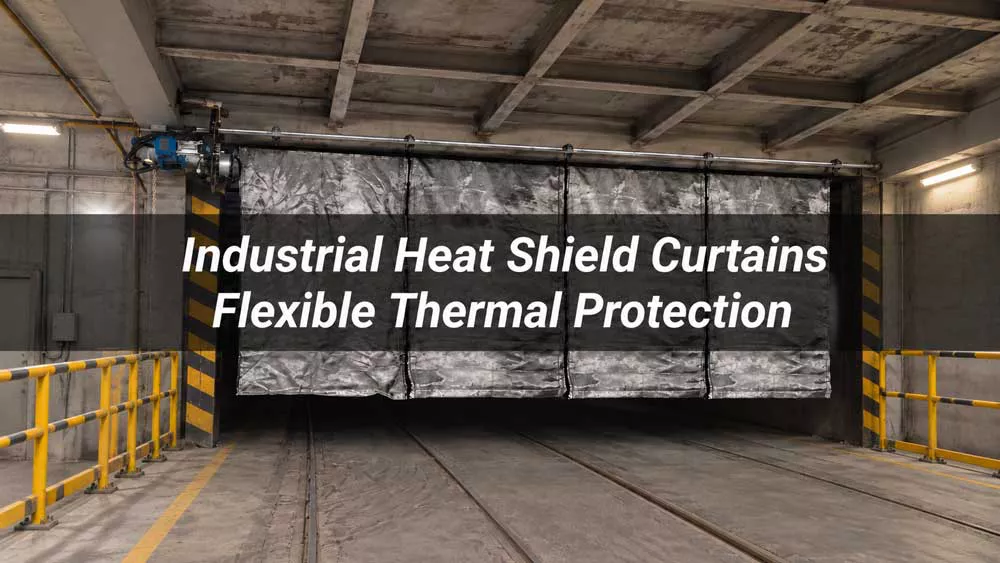
Heat from a furnace opening or hot material transfer area does not always stay within the process zone. It can reach nearby equipment, expose adjacent work areas to radiant heat, and make routine access more difficult.
A permanent enclosure may be impractical where maintenance, loading, or equipment movement must continue. Industrial heat shield curtains offer a flexible way to introduce a thermal barrier while retaining access to the working area.
Choosing the right curtain, however, takes more than comparing maximum temperature figures. The material structure, exposure conditions, panel layout, and mounting system all affect how the barrier performs.
An industrial heat shield curtain is a flexible barrier installed between a heat source and an adjacent area to help reduce heat transfer.
Depending on its construction, it may use heat-resistant fabric, an insulation core, a reflective facing, metal reinforcement, or a combination of these elements.
The terms industrial heat resistant curtains, thermal barrier curtains, and industrial thermal insulation curtains describe related products, but they do not necessarily indicate the same performance.
A heat-resistant fabric may survive elevated temperatures without providing much insulation. An insulated curtain adds resistance to heat passing through its thickness. A reflective curtain uses a suitable facing to reduce the absorption of incident radiant heat.
The first selection question should therefore be: What must the curtain achieve at this location?
Heat shield curtains can be considered wherever a hot process needs partial separation from its surroundings while access remains necessary.
A curtain may provide an additional barrier near a furnace or oven opening where loading, inspection, or maintenance prevents permanent closure.
Its position must account for the furnace operating cycle, flame path, ventilation, and access requirements. It should not interfere with combustion air, exhaust flow, or equipment movement.
In foundries and smelting plants, curtains can help separate areas exposed to radiant heat from neighboring work zones or equipment.
Where sparks or molten metal splash are also present, these must be assessed separately. A curtain selected for radiant heat shielding should not automatically be treated as suitable for direct molten metal contact.
Hot components, transfer operations, and exposed equipment surfaces can create localized heat exposure beyond the main process equipment.
A curtain positioned between the source and nearby services may provide a practical barrier. Coverage matters: heat can still reach the protected area through side gaps, panel joints, or uncovered sections.
For wide or tall openings, multiple curtain panels can form a larger barrier. A sliding arrangement allows the opening to be uncovered when access is required.
At this scale, the curtain and its support system need to be designed together. Panel weight, overhead clearance, opening frequency, and the space needed to park the curtain all influence the layout.
These functions work in different ways and should be specified separately.
| Function | Main purpose | What to check |
|---|---|---|
| Heat resistance | Helps the material withstand its exposure conditions | Continuous service rating, short-term exposure limits, and compatibility of all layers |
| Thermal insulation | Resists heat transfer through the curtain | Insulation material, thickness, joints, and required performance |
| Radiant heat reflection | Reduces absorption of incident radiation using an appropriate facing | Facing suitability, orientation, surface condition, and temperature limits |
An insulating layer does not guarantee a particular cold-side temperature. Likewise, a reflective surface does not replace insulation where substantial resistance to through-thickness heat transfer is required.
Some applications benefit from combining these functions. Others need a simpler structure that is easier to move and maintain.
LXHTR develops custom heat shield curtains using metal mesh reinforcement and high-temperature insulation materials for industrial thermal barrier applications.
The construction can be adapted around several practical requirements.
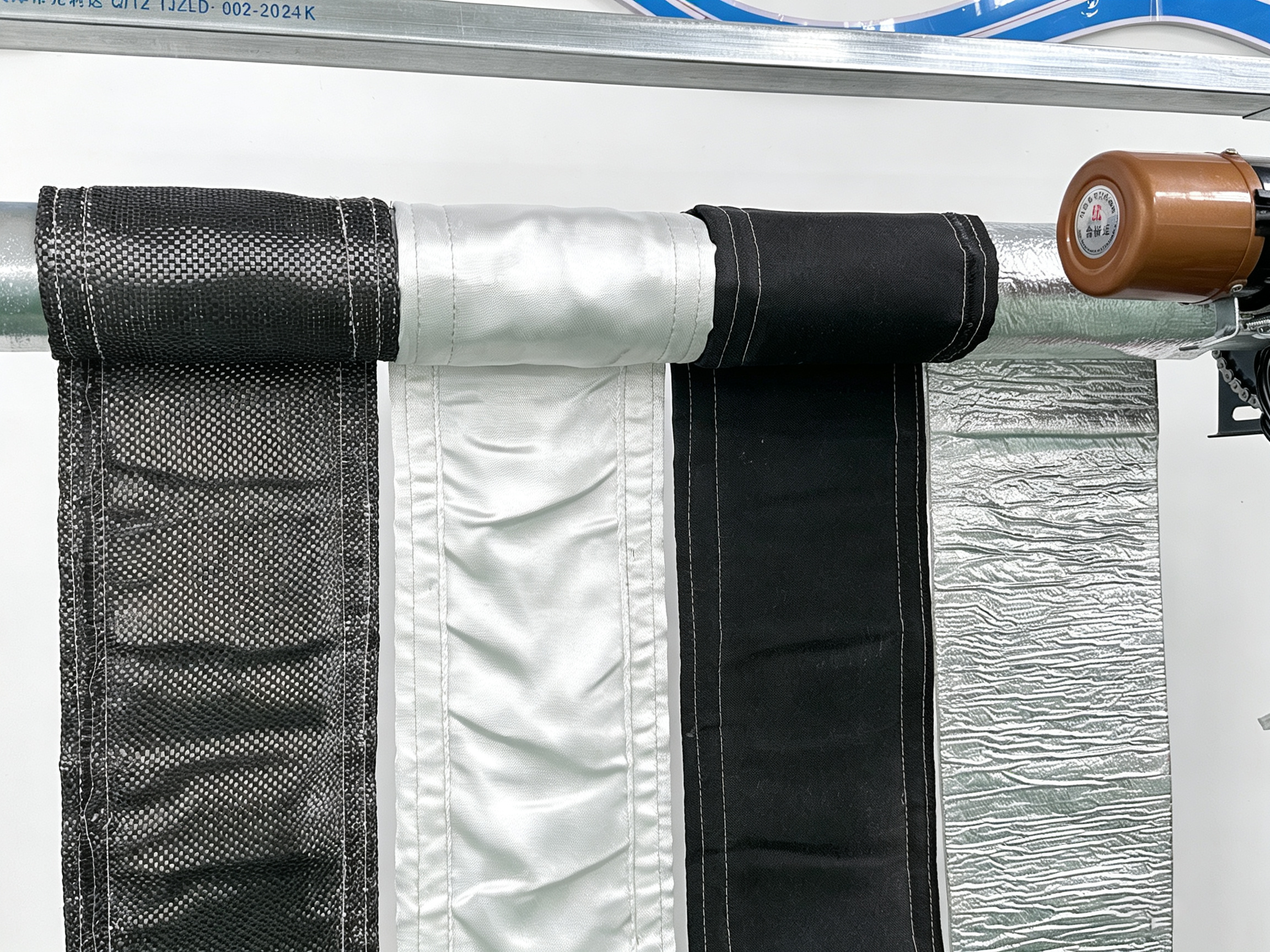
Metal mesh reinforcement: Reinforcement helps support the curtain structure and improve resistance to mechanical wear. Mesh selection must also suit the temperature, atmosphere, and expected movement.
Insulation layers: The insulation structure is selected according to the required thermal performance and exposure conditions. Thickness must be considered alongside weight and handling requirements.
Modular panels: Dividing a large curtain into manageable sections can simplify handling, installation, and replacement of individual sections. Panel joints and overlaps need to be included in the design.
Mounting details: Suspension points, edge reinforcement, rings, and connections form part of the working assembly. Their suitability matters as much as the main curtain material.
For available construction and mounting options, explore LXHTR heat shield curtains.
The best mounting arrangement depends on how the opening is used.
| Installation approach | Suitable starting point | Design considerations |
|---|---|---|
| Fixed suspension | An area requiring continuous separation with limited access | Support condition, edge coverage, and maintenance access |
| Hanging rod system | A relatively simple suspended barrier | Curtain weight, suspension spacing, and ease of movement |
| Sliding rail system | An opening that must be uncovered regularly | Roller capacity, track alignment, travel distance, and parking space |
| Motorized roll-up system | Openings requiring powered vertical access | Overhead clearance, rolling suitability, drive capacity, and heat protection of components |
A thicker curtain may offer greater thermal resistance, but it also adds weight and can be harder to gather or move. For large installations, support loading should include the curtain’s concentrated weight when parked, rather than only its weight when spread across the opening.
The intended opening sequence should be discussed before manufacture.
Consider a curtain installed near a hot furnace. The furnace setpoint describes the process, but it does not fully describe what the curtain experiences.
Distance, line of sight to the opening, exposure duration, airflow, and hot gas movement can change the thermal conditions at the curtain.
For a useful assessment, distinguish between:
· Heat source temperature: The temperature of the process, hot surface, or material.
· Curtain exposure conditions: The radiation, hot gases, or contact the installed curtain must withstand.
· Required protected-side condition: The temperature or heat exposure acceptable at a defined location.
If a project requires a specific back-surface temperature, define the measurement position and operating conditions. A temperature measured on the curtain surface is different from an air temperature measured some distance behind it.
Where performance is critical, a representative trial or agreed thermal assessment can help confirm the proposed structure before a full installation.
A suitable material can still perform poorly if the installed barrier leaves important areas uncovered.
During design and commissioning, check panel overlaps, side clearances, bottom gaps, and any openings around equipment. Coverage should be balanced with the ventilation and access the process needs.
Inspection should focus on the parts most likely to affect continued performance: suspension points, seams, panel edges, insulation condition, and moving hardware. Look for damage after unusual heat exposure, impact, or process incidents.
A general-purpose thermal curtain should not be assumed to provide certified fire compartmentation. Smoke and fume management also need to be considered with the site’s extraction and ventilation arrangements.
You do not need a completed specification to begin a discussion. Clear site photos and a few operating details are a useful starting point:
· Opening width and height, with photos or a drawing.
· Heat source temperature and distance to the proposed curtain.
· Continuous exposure duration and operating cycle.
· Presence of hot gases, flame, sparks, splash, dust, or chemicals.
· Required opening method and frequency.
· Available support structure and overhead space.
· Any protected-side temperature target and its measurement location.
These details help narrow the material structure, panel arrangement, and mounting approach before pricing.
Hubei Liaoxin New Material Technology Co., Ltd. provides custom industrial thermal protection solutions under the LXHTR brand.
For furnace surroundings, smelting areas, or large industrial openings, the aim is to develop a curtain arrangement that fits both the thermal conditions and the way the site operates.
Planning a heat barrier for your facility? Send your opening dimensions, site photos, and operating conditions to sales@lx-htr.com. Our team can review the application with you and discuss a suitable curtain structure and installation approach.