+86-15997942336
sales@lx-htr.com
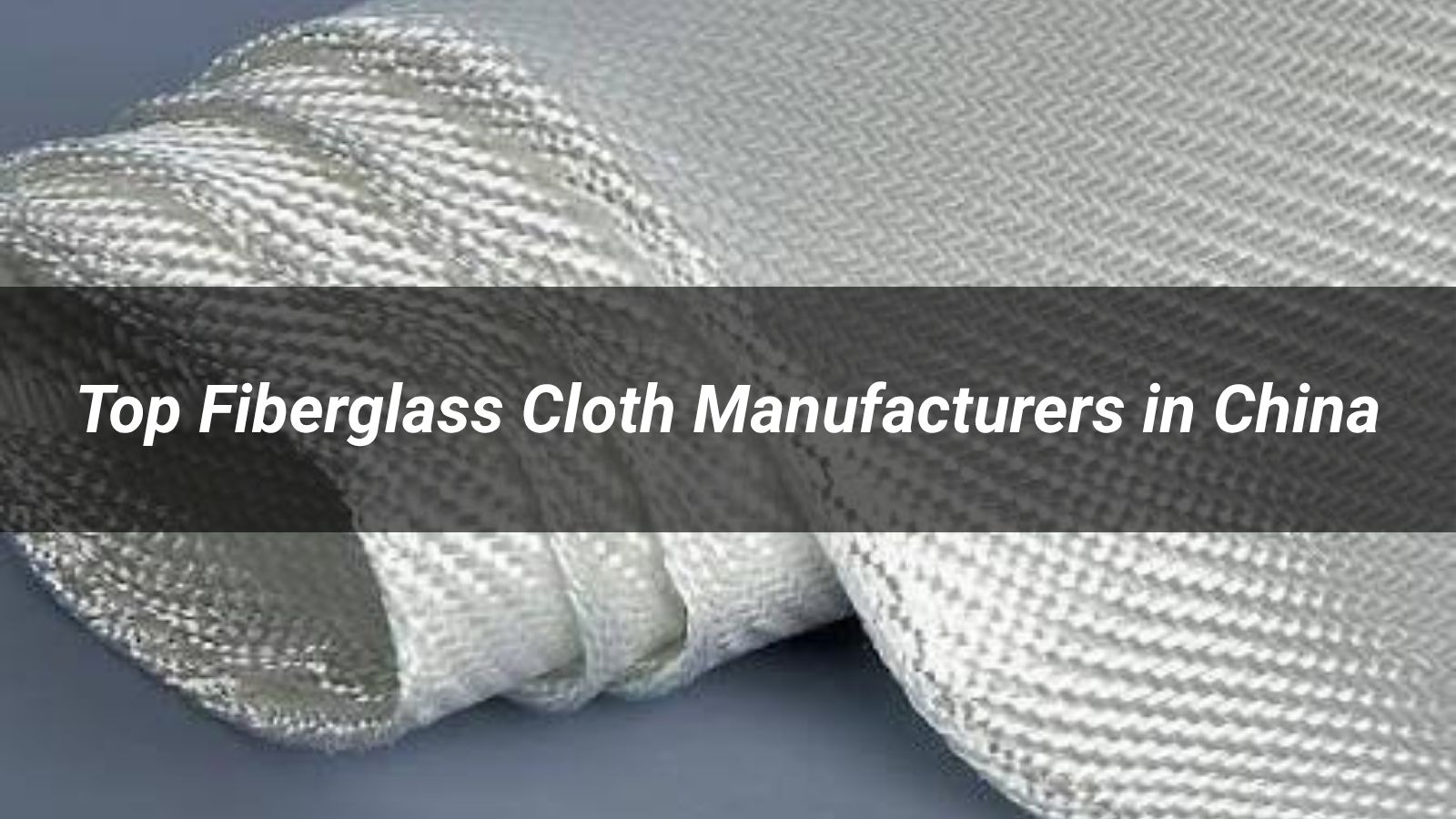
China fiberglass cloth remains the backbone of global composite and insulation supply chains in 2026, with woven E-glass and coated variants shipped to PCB, marine, and fire-protection markets worldwide. Buyers evaluating china fiberglass cloth sources are no longer looking for the cheapest roll—they want batch consistency, traceable specs, and direct factory accountability.
This review cuts through supplier directories to answer one practical question: which Chinese manufacturers can actually deliver industrial-grade fiberglass fabric at scale? We ranked vendors using export records, production assets, certification depth, and application fit. The guide is built for:
The ten suppliers covered below represent different strengths—from yarn-integrated mills to coating specialists and high-temperature conversion factories—and choosing the wrong type can delay tooling, fail compliance, or inflate landed cost. Read on to see who fits your spec, your MOQ, and your audit trail.
Website: https://www.jnglassfiber.com/
Location: Changshu, Jiangsu, China
Established / Scale: 1956; 250–300 employees; 70,000+ sqm plant; 80 km from Shanghai Port
Certifications: ISO 9001, ISO 14001, BSI Kitemark, TÜV, Australian QAS, EN 1869
Main Products: Woven E-glass fabric, electronic-grade fiberglass cloth, silicone / PU / acrylic / EPDM coated fabric, fiberglass mesh, welding blanket and fire blanket, thermal insulation fabric.
Company Overview: For over three decades, Changshu Jiangnan Glass Fiber has operated as one of the longest-established woven and coated fiberglass mills in East China, serving buyers who compare fiberglass cloth manufacturers in China across both electronic-grade and thermal-protection categories. The company backs its production with a 30-plus-year R&D and quality team plus an in-house fire-test laboratory, allowing it to support specifications that go beyond a standard catalogue style number. Located in the Yangtze River Delta, the facility also shortens logistics lead time to Shanghai and Ningbo for full-container shipments.
Buying Tips: Ask for the finish type (silane coupling agent, heat-cleaned or plain) before quoting PCB-grade 7628 or 2116 — the wrong finish changes resin adhesion and dielectric performance. For coated fabric, confirm continuous service temperature, coating-side orientation and roll length before approving production. Buyers evaluating E-glass fiberglass fabric for smoke curtains, fire blankets or building insulation should request third-party test reports alongside the mill certificate.
Website: https://www.fibermeshtape.com/fiberglass-cloths/
Location: Nankang District, Ganzhou, Jiangxi, China
Established / Scale: 2001 (operating since 2001, registered 2002); 240 employees; 260 rapier looms, 10 coating lines
Certifications: ISO 9001 (since 2007)
Main Products: 3732, 7628 and 2116 E-glass fiberglass cloth, aluminum-foil-laminated glass fabric, alkali-resistant mesh, self-adhesive joint tape, welding-protection fabric.
Company Overview: With 23 years of continuous operation, Jiangxi Mingyang GlassFiber has grown into a key E-glass fabric supplier in Jiangxi province, covering the full range from electronic substrates to industrial thermal cloth. Its production lines handle 7628, 3732, and 2116 styles alongside aluminium-foil laminated and tape-converted products, making it a practical one-stop option for distributors managing mixed-spec orders. ISO and SGS credentials support its export record across Asian and European markets, while the inland location helps keep mill pricing competitive against coastal neighbours.
Buying Tips: If you are sourcing 7628 electronic glass fabric, specify the end use (CCL substrate versus general reinforcement) so the supplier selects the correct yarn and heat-treatment route. For foil-laminated cloth, confirm aluminium thickness, adhesive temperature rating and whether the roll is supplied with or without liner. Providing annual volume, target weight per square metre and required width will produce a usable quotation much faster than a generic RFQ.
Website: https://www.coatedfiberglassfabric.com/
Location: Dantu District, Zhenjiang, Jiangsu, China
Established / Scale: 2004; 100–200 employees; 5–10 R&D staff; export share 71–90%
Certifications: ISO 9001, SGS, M0 certificate on selected fire-rated items
Main Products: PU, silicone, PTFE, acrylic, graphite and vermiculite coated fiberglass fabric, aluminium-foil-laminated fabric, welding blanket roll, fire and smoke curtain fabric, expansion-joint cloth, thermal insulation fabric.
Company Overview: Suntex Composite Industrial focuses on the coated side of the supply chain, turning woven E-glass base cloth into finished PU, silicone, and PTFE fabrics for welding curtains, fire blankets, and expansion joints. The company runs dedicated coating lines and converts materials in-house, which gives buyers more control over coating weight, colour matching, and roll width without going through multiple sub-vendors. For importers whose main demand is heat-resistant cloth rather than bare woven styles, Suntex represents a conversion-first manufacturer with export experience in North America and Europe.
Buying Tips: Define the failure mode first — flame spread, smoke, oil/water exposure or continuous heat — then choose coating chemistry, because PU, silicone and PTFE are not interchangeable. Tell the supplier the fabric’s position in the assembly (inner liner, outer skin or expansion joint) and whether it will be sewn, taped or clamped; this changes the recommended edge treatment and coating weight. For fire resistant fiberglass fabric, always match the test standard to your destination market rather than comparing certificate names alone.
Website: https://www.frp-cqdj.com/fiberglass-cloth/
Location: Beibei District, Chongqing, China
Established / Scale: Operating since 1978 / 1980; three-generation family business; 1,000+ tonnes of fiberglass roving consumed per month
Certifications: ISO 9001, BSCI
Main Products: Fiberglass fabric / woven roving, chopped strand mat, fiberglass mesh, roving, unsaturated polyester / vinyl ester / epoxy resin, gel coat, mould release wax, FRP reinforcement bars and tubes.
Company Overview: Operating since 1978, Chongqing Dujiang Composites is a three-generation woven-roving and cloth mill in Southwest China, with a registered entity dating to 2002 and a product range that spans fiberglass cloth, mesh, and fire-blanket materials. Its 40-plus-year history gives it one of the deepest production track records among Chinese FRP material suppliers, and its location in Chongqing serves buyers looking to diversify sourcing away from the crowded coastal manufacturing belt. The company positions itself as a wholesale-oriented factory serving both trading companies and end-user distributors.
Buying Tips: For laminating projects, request roving and cloth from the same production batch where possible to keep resin compatibility and fibre-volumetric balance predictable. Buyers looking at fiberglass woven roving for boats or tanks should state mould size, lay-up method (hand lay-up, infusion or press), target laminate thickness and gel time so the supplier recommends weight and weave correctly. Treat this source as a consolidation play — the saving comes from one PO and one shipment, not necessarily from the lowest per-metre cloth price.
Website: https://lx-htr.com/
Location: Chongyang County, Xianning City, Hubei, China
Established / Scale: 2016; 26–50 employees; factory in Hubei Chongyang Economic Development Zone; 1,000+ industrial projects delivered
Certifications: ISO 9001:2015, ISO 14001:2015, ISO 45001:2018; MA Mining Safety Certification; high-tech enterprise (15+ utility model patents)
Main Products: Silicone coated fiberglass fabric, fiberglass welding blanket and fire blanket, high-silica welding blanket, thermal barrier curtain (up to 1,200 °C), fire sleeve, insulation jacket, launder insulation cover, electrode sealing ring.
Company Overview: Since 2016, Hubei Liaoxin New Material Technology Co., Ltd. (LXHTR) has built a reputation as a high-temperature insulation and sealing specialist in Hubei province, supplying welding blankets, fire sleeves, thermal curtains, and chute covers to heavy-industry clients including Jinchuan Group, Yunnan Tin Group, and Jiangxi Copper Group. The company holds ISO 9001, ISO 14001, and ISO 45001 certifications, along with MA mining safety approval and 15-plus utility model patents. Rather than weaving base cloth from raw yarn, LXHTR works as a material-sourcing and in-house converting operation, turning coated fiberglass fabric into finished protective products for smelting, mining, and foundry applications.
Buying Tips: Define the service condition first — continuous temperature, flame exposure, abrasion and whether the part flexes — because silicone, PU and high-silica constructions are not interchangeable. For a welding blanket or furnace curtain, give the aperture or frame dimensions, mounting method and required temperature class so the quotation includes the correct hemming and attachment hardware. Buyers comparing silicone coated fiberglass fabric should request coating weight, third-party fire test reports and a production-sample cut, then confirm lead time and export crating for full-container shipment from Hubei.
| Manufacturer | Best Fit | Core Strength | Buyer Consideration |
|---|---|---|---|
| Changshu Jiangnan | PCB substrates, fire blankets, thermal & electronic cloth | Vertical integration: in-house yarn, weaving and coating | Specify the exact finish and test standard for electronic grades |
| Jiangxi Ming Yang | Insulation, foil-laminated fabric, mesh and tape combos | 260 looms and 10 coating lines under one roof | Combine styles in one container to reduce unit freight |
| Suntex | PU / silicone / PTFE coated fabric, fire and smoke curtains | Coating chemistry depth and M0-rated items | Match coating type to the real service condition |
| Chongqing Dujiang | Marine, tank and pipe FRP, one-stop raw materials | Resin, mat, roving and cloth from one supplier | Best for mixed BOM consolidation, not fine electronic cloth |
| LXHTR | Welding blankets, fire sleeves, furnace & launder insulation | Converts coated cloth into finished, install-ready protection systems | Match coating chemistry and temperature class to the real service condition |
The three common weaves are plain weave, twill weave, and satin weave. Plain is cost-effective and stable; twill offers better drape; satin provides a smooth surface for complex molds.
Fiberglass cloth is sold by manufacturers, distributors, and hardware retailers. For bulk or industrial use, sourcing directly from China manufacturers ensures better pricing and customization.
It is widely used in PCB fabrication, boat building, surfboards, fire blankets, welding curtains, thermal insulation, and construction reinforcement.
Satin weave or heavy-weight unidirectional fiberglass cloth is strongest. For extreme heat protection, coated fabrics like silicone or PU coated fiberglass cloth offer superior durability.
Sourcing fiberglass cloth from China gives you access to a complete industrial chain, from raw yarn to coated fabrics, with competitive pricing and flexible customization. Whether you need E-glass 7628 for PCB laminates, 600 gsm plain weave for marine projects, or silicone coated cloth for welding blankets, the right manufacturer can ensure consistent quality and batch-to-batch stability. Before placing a bulk order, always compare machine capacity, certifications, and value-added services to avoid costly spec mismatches.
If your project involves high-temperature environments such as smelting, mining, or heavy industry, our team at LXHTR can provide tailored thermal insulation and sealing solutions. As a China-based manufacturer since 2016, we have built long-term partnerships with leading enterprises including Jinchuan Group, Yunnan Tin Group, and Jiangxi Copper Group. Visit https://lx-htr.com/ to explore our product range or speak directly to one of our engineers for a custom quote. Send us your requirements today and let us help you protect your equipment and workforce with reliable high-temperature solutions.