+86-15997942336
sales@lx-htr.com
Getting the right flange guard at the right price is a decision that affects both plant safety and procurement budgets. For anyone sourcing flange guards, price is rarely the only variable — but it is almost always the first question asked.
Based on current market data, flange guard prices range from under $5 for a small PVC unit to over $150 for a large-diameter SS316 shield. Material, pipe size, and design type are the three factors that drive most of the variation. With stricter safety regulations and growing demand across chemical, petrochemical, and water treatment industries, buyers are under increasing pressure to balance cost with compliance. This guide is written for:
This guide covers the full cost picture — by material, by type, and by the factors that push price up or down — so you can make a confident, well-informed purchasing decision. Read on to find the right spec for your application.
Table of Contents
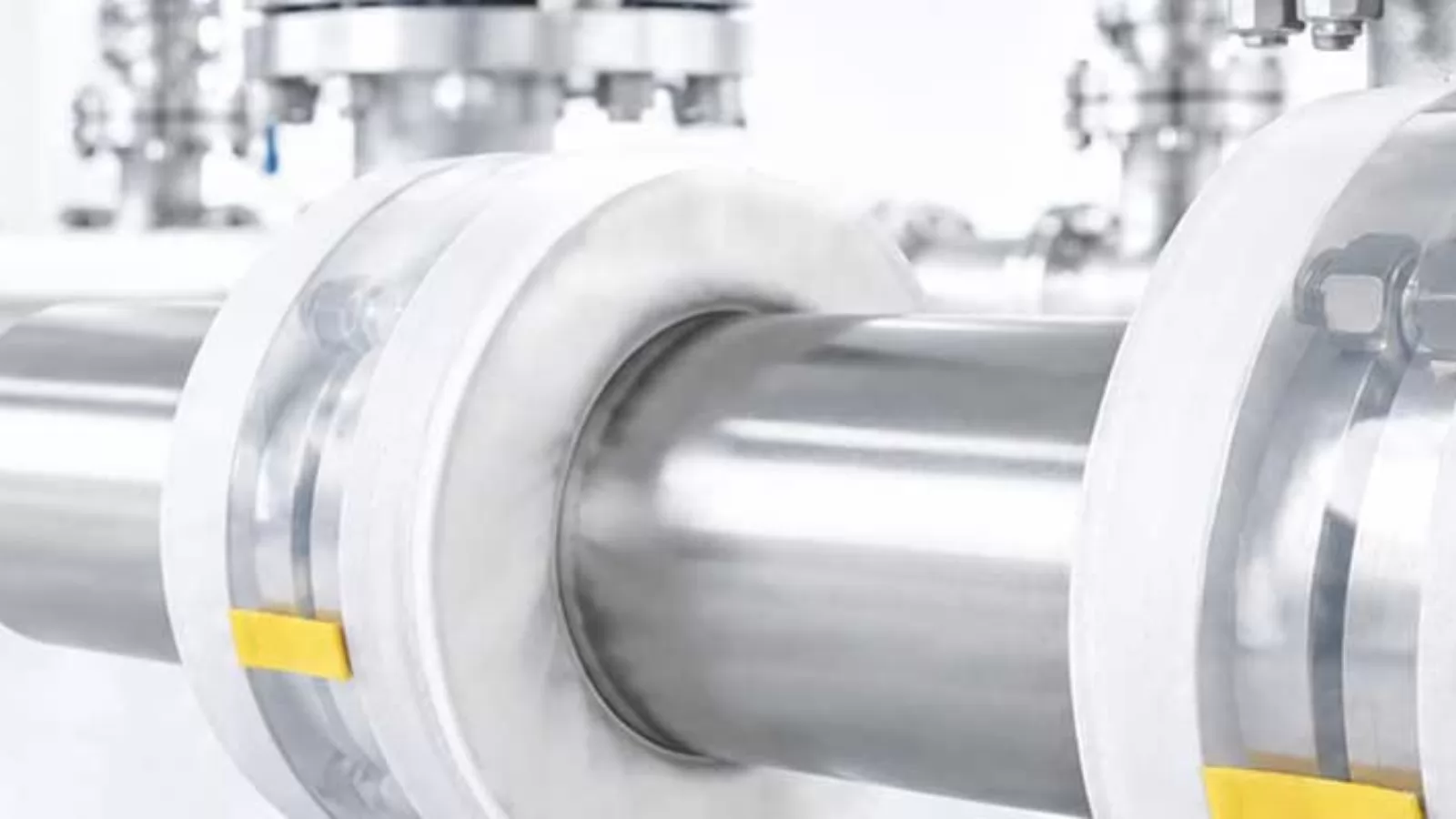
A flange guard wraps around a pipe joint to catch any spray or leak before it reaches people or equipment nearby. It is not a seal — it is a second line of defense.
Picture a maintenance worker walking past a chemical line carrying sulfuric acid at 8 bar. A pinhole leak at the flange joint shoots a fine mist invisibly into the air. With no guard in place, that mist hits skin in seconds.
A flange guard redirects it inward, buys time, and triggers a visible drip — not a silent hazard.
Industries that rely on them every day:
One small part. One clear job: contain the spray, protect the people.
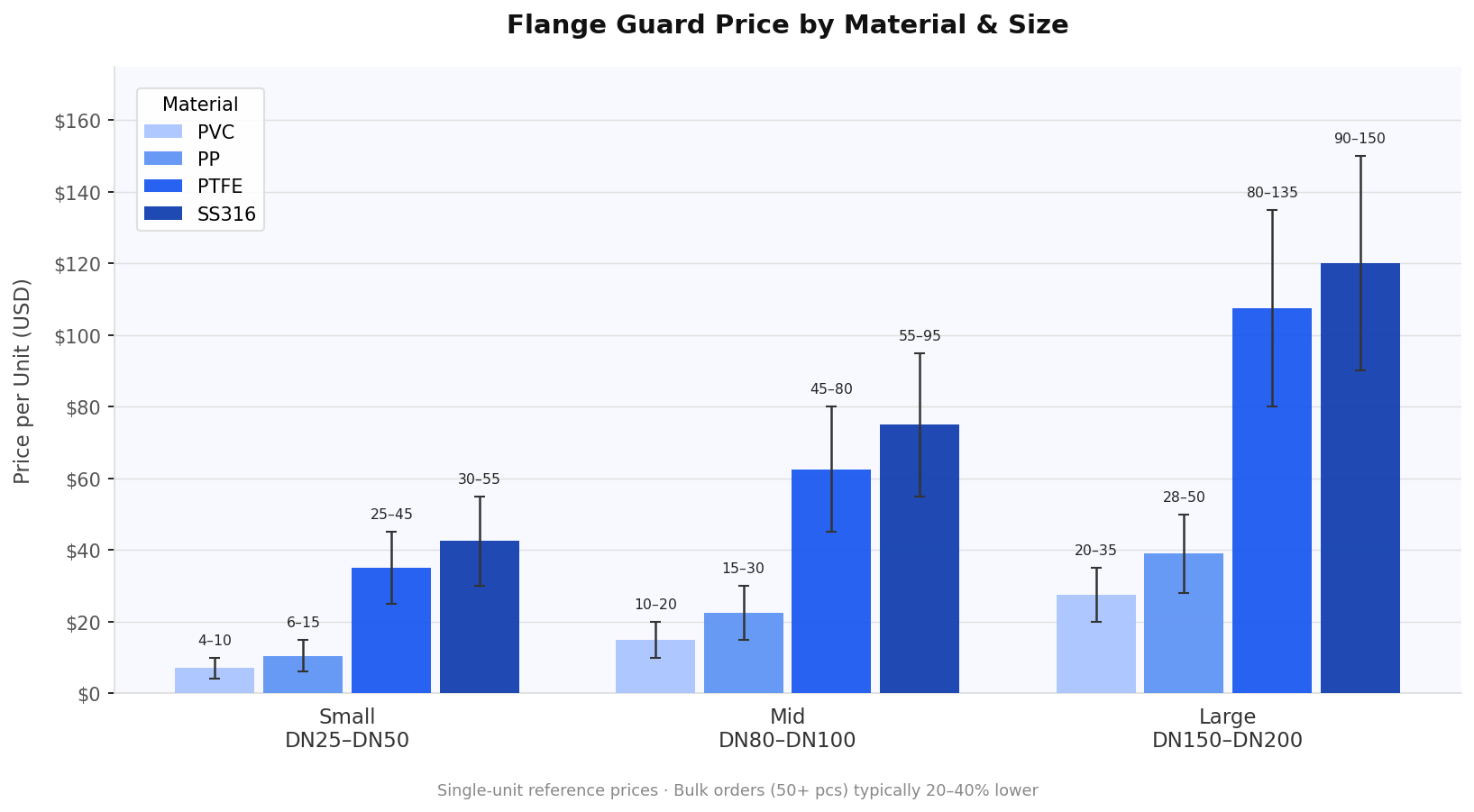
Price depends mainly on material and pipe size. Smaller PP guards can cost as little as a few dollars per unit. Full-size PTFE shields for large-diameter lines can exceed $100. Here is a realistic range based on current market pricing.
| Material | Small Size (DN25–DN50) | Mid Size (DN80–DN100) | Large Size (DN150–DN200) |
|---|---|---|---|
| PVC | $4 – $10 | $10 – $20 | $20 – $35 |
| PP | $6 – $15 | $15 – $30 | $28 – $50 |
| PTFE (TFE-coated fiberglass) | $25 – $45 | $45 – $80 | $80 – $135 |
| Stainless Steel SS316 | $30 – $55 | $55 – $95 | $90 – $150+ |
These are single-unit reference prices from standard industrial suppliers. Bulk orders of 50 units or more typically bring unit cost down by 20–40%.
A purchasing manager sourcing PP guards for a 200-flange water treatment plant reduced per-unit cost from $22 to $13 simply by consolidating the order into a single bulk purchase. Same spec, same supplier — better volume leverage.
Three factors push cost higher more than anything else:
Standard sizes ship within 3–7 days and carry no premium. Custom dimensions, non-standard pressure ratings, or color coding for hazard zone identification typically add 25–50% to unit price and extend lead time by 2–4 weeks. For large projects, the extra cost is usually worth it — mismatched guards create installation gaps that defeat the purpose entirely.
Material is the single biggest pricing variable. Get it right and the guard lasts years. Get it wrong and you are replacing it inside six months — at full cost, plus labor.
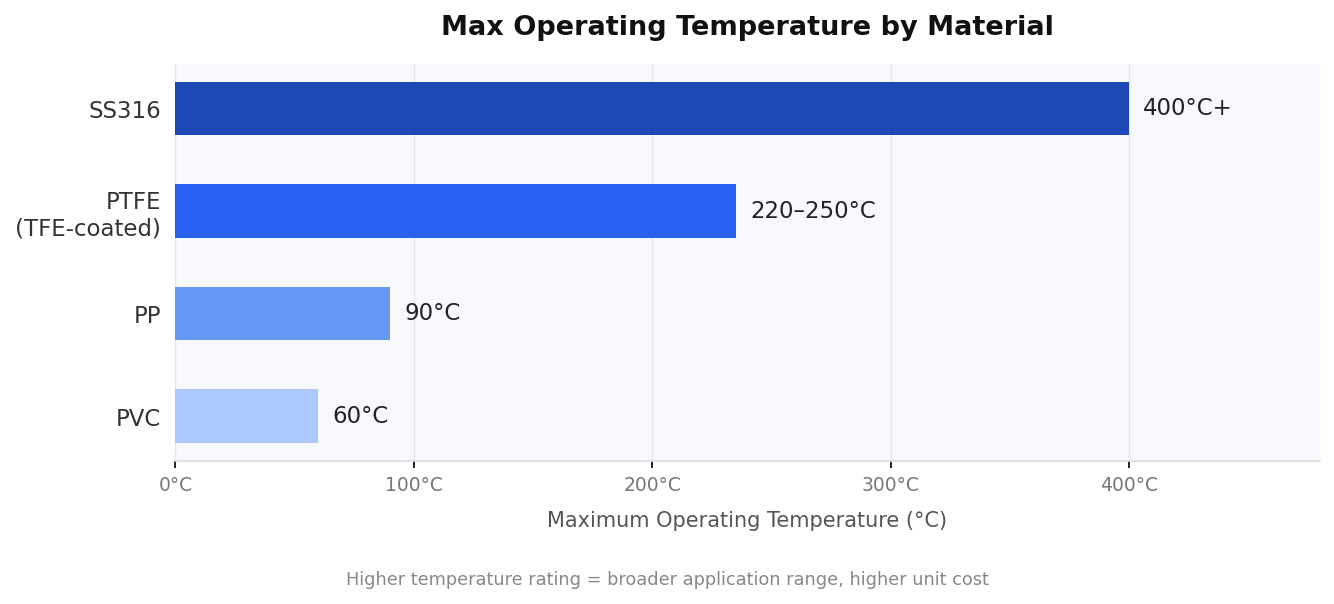
| Material | Max Temp | Best For | Relative Cost |
|---|---|---|---|
| PVC | 60°C | Water, mild solvents, low-pressure lines | Lowest |
| PP | 90°C | Dilute acids, alkalis, general chemical service | Low–Medium |
| PTFE (TFE-coated fiberglass) | 220–250°C | Strong acids, HF, concentrated H₂SO₄, high temp | High |
| SS316 | 400°C+ | High-pressure steam, oil & gas, mechanical impact | High–Premium |
For aggressive media like HF or concentrated sulfuric acid, PTFE is not a premium upgrade — it is the minimum viable option. The price difference pays for itself within the first replacement cycle.
Beyond material, the design adds to the bill in predictable ways.
| Guard Type | Price vs. Standard | When to Choose It |
|---|---|---|
| Standard wrap-around | Base price | Most general applications |
| With drain port | +$8 – $25 per unit | Acid lines, audit-required leak visibility |
| Box type (full enclosure) | +15 – 30% | Mist-prone joints, below electrical equipment |
| Bearing guard | Varies by equipment | Pumps, mixers, rotating flanged connections |
A chemical plant added drain-port guards across all acid lines after an audit found standard guards had been concealing slow seeps for weeks. The drip from the drain port turned a potential incident into a routine maintenance call — and the $15 per-unit upgrade looked very cheap in hindsight.
A guard that does not fit creates a false sense of security. These are the numbers you need before placing an order.
Most suppliers size guards by nominal pipe size — either NPS (inch-based, common in North America) or DN (millimeter-based, used in DIN/EN systems). Confirm which standard your piping follows. A DN50 and a 2" NPS flange are close but not identical — ordering the wrong one means the guard will not seat correctly.
You will typically need three data points to specify correctly:
A line running at 75°C normally may spike to 120°C during process upsets. A PVC guard rated to 60°C will fail silently under those conditions — with no visible warning. Always specify against the maximum credible operating condition, not the steady-state figure.
_1782359653_WNo_1484d678.png)
| Fastening Type | Install Time | Best For |
|---|---|---|
| Velcro / hook-and-loop strap | <1 minute | High inspection frequency, easy-access locations |
| Stainless steel buckle strap | 1–2 minutes | Vibrating lines, outdoor or UV-exposed installations |
| Bolt-on / clamped | 5–10 minutes | Permanent high-pressure installations |
Velcro-strap guards are the most common choice for plant environments — fast to install, easy to inspect, and simple to remove during maintenance windows.
The market runs from specialist manufacturers to general industrial distributors. Who you buy from matters almost as much as what you buy.
A specialist manufacturer offers tighter dimensional tolerances, full material traceability, and engineers who can advise on edge cases. A general distributor may stock the same SKUs but cannot support non-standard configurations or provide the documentation many project specifications require.
A procurement team sourcing guards for an offshore platform found the cheapest online listing came with no material certificate and no country-of-origin documentation — both required by their project spec. The specialist supplier had both on hand within 24 hours, at a modest price premium that was never questioned again.
For safety-critical or regulated applications, ask suppliers specifically for:
Reputable suppliers provide these without hesitation. If a supplier cannot produce an MTR on request, that is a signal to look elsewhere.
Standard sizes typically ship within 3–7 working days. Custom dimensions or special drain configurations add 2–4 weeks. For planned shutdowns or turnaround maintenance, confirm lead time at least 4–6 weeks in advance — late delivery of a $30 guard should not delay a multi-million-dollar outage window.
Some questions come up on almost every inquiry. Here are direct answers.
For DN25 to DN50, expect $4–$15 for PVC, $6–$15 for PP, and $25–$45 for PTFE per unit. Small sizes cost less but the saving is narrower than most buyers expect — tooling and labor costs are largely fixed regardless of size.
Typically $8–$25 extra per unit. PTFE drain-port guards carry the largest premium due to machining complexity. For acid lines, the added leak visibility makes it a straightforward decision.
At smaller sizes they are similar. At DN150 and above, SS guards tend to cost more due to material weight and fabrication. PTFE remains expensive across all sizes because of raw material cost.
Yes. Most suppliers offer 20–40% off unit price at 50 pieces or more. For large projects, consolidating all sizes into one order — even across different materials — often unlocks better overall pricing than placing separate smaller orders.
Most specialist manufacturers offer color coding and logo marking. Custom color molding typically requires a minimum of 100–200 units and adds 20–40% to base price. Print or laser marking on standard colors is cheaper and available at lower MOQs.
In aggressive service, yes. A PTFE guard lasting 5–8 years costs less annually than a PVC guard replaced every 10–12 months — once you factor in labor and downtime. In mild service, PVC or PP is perfectly adequate and the premium is unnecessary.
Flange guard pricing is straightforward once you understand what drives it — material, size, and design. PVC and PP cover the majority of general plant applications at a low cost. PTFE and SS316 cost more upfront but are the only sensible choices where chemistry or pressure demands it. Buying the wrong material to save a few dollars per unit is rarely the saving it appears to be.
Sizing, fastening method, and supplier reliability matter just as much as the unit price. A well-specified guard from a manufacturer who can provide full documentation and application support will always outperform a cheaper alternative that arrives without traceability or technical backing.
At LXHTR, we supply flange guards and spray shields across the full range of materials — PVC, PP, PTFE, and SS316 — in standard and custom configurations. If you have a specific application, size, or project volume in mind, our team is ready to help you specify the right product at the right price.